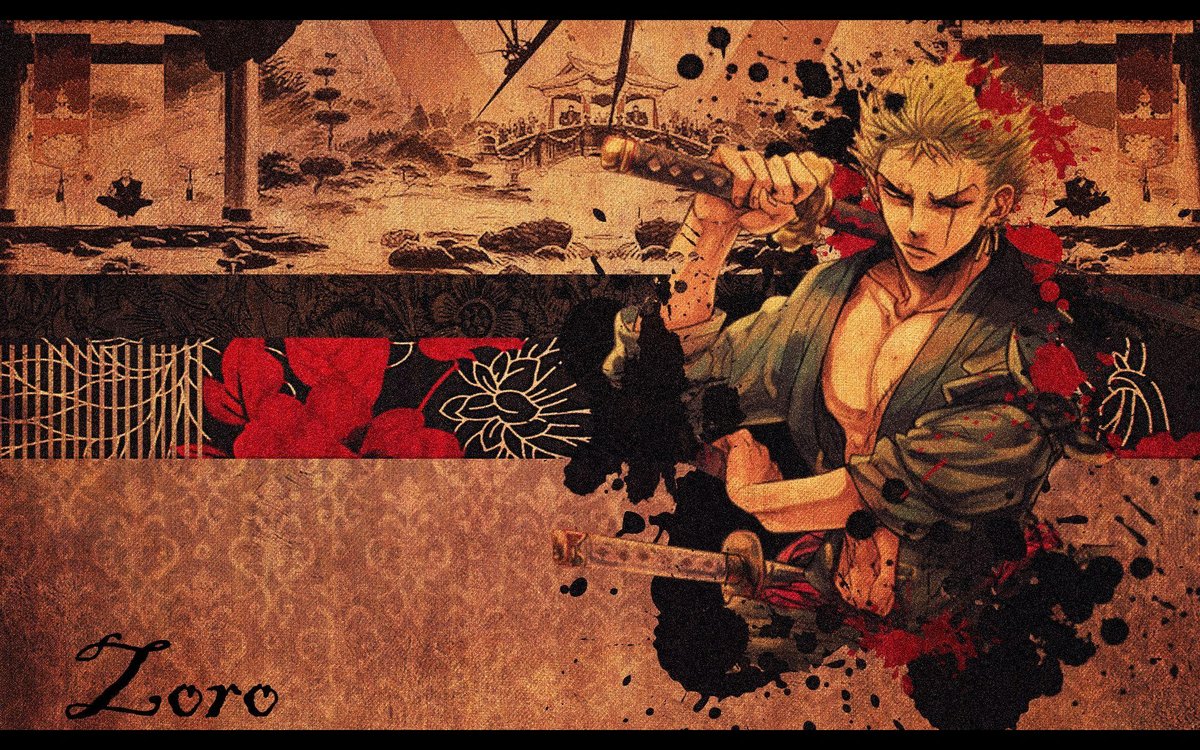
Few characters in anime spark as much discussion and intense analysis as Roronoa Zoro. The stoic, formidable "Pirate Hunter" from One Piece has captivated audiences with his unwavering loyalty, superhuman strength, and singular ambition to become the world's greatest swordsman. But what happens when you take a character this iconic and imagine him in a completely different spiritual realm?
Enter one of the most intriguing fan theories circulating the depths of the internet: Roronoa Zoro in the world of Noragami. This isn't just a whimsical crossover; it’s a surprisingly deep exploration of parallels between Zoro's established traits and the intricate spiritual mechanics of Noragami. Get ready to unpack how Zoro's ambition, his connection to cursed swords, his "demonic" presence, and even his notorious sense of direction (or lack thereof) could find a compelling home among gods, spirits, and regalia.
This super pillar hub is your definitive guide to understanding this fascinating theory, connecting Zoro's core identity with the mystical elements of Noragami.
The Pirate Hunter's Soul: Why Zoro Fits the Noragami Mold
Roronoa Zoro is more than just a powerful swordsman; he's a force of nature driven by an unyielding will and a profound dedication to his chosen path. His stern demeanor, immense strength, and often solitary focus make him stand out, even among the eccentric Straw Hats. These very qualities, however, are what make him a prime candidate for a spiritual reimagining within Noragami's universe.
At his core, Zoro embodies dedication and an almost spiritual connection to his swordsmanship. He rarely shows weakness, preferring quiet solemnity and relentless training. His belief in fate, despite claiming to be an atheist, adds another layer of mysticism that perfectly aligns with the Noragami world, where gods and spirits dictate destiny. To truly appreciate the foundation of this theory, you'll want to dive into a comprehensive profile of Zoro's journey and understand what makes him tick.
The Noragami universe, meanwhile, is rich with concepts of divine beings, human souls manifesting as powerful weapons (Regalia), and malevolent spirits (Ayakashi). Understanding these fundamental elements is crucial to appreciating the crossover. You can immerse yourself in the rich lore of the Noragami universe and grasp the fundamental concepts of gods, regalia, and ayakashi to get a firm footing before we dive deeper into Zoro’s potential role within it.
The Soul of the Blade: Zoro's Swords as Regalia
One of the most compelling aspects of Zoro's character is his deep, almost sentient connection to his swords. He doesn't just wield them; he respects them, trusts them, and in some cases, allows them to choose him. The Sandai Kitetsu, a cursed blade, is a prime example, accepting Zoro as its master only after he defied its curse with pure willpower. His Wado Ichimonji, inherited from his childhood friend Kuina, holds immense sentimental value, which he refuses to part with.
In Noragami, human souls who die tragically or with unfinished business can become Regalia (Shinki) when named by a god. These Regalia transform into powerful weapons or tools, embodying the god's power while retaining their human personality and memories. Imagine Zoro's legendary blades—Wado Ichimonji, Sandai Kitetsu, Shusui, and now Enma—not just as inanimate objects, but as powerful Regalia that have chosen their wielder, or perhaps even contain fragments of powerful spirits themselves. His deep attachment and reverence for his swords could be interpreted as a divine connection, a bond far beyond that of a mere human and his tools. For a closer look at these iconic weapons, be sure to explore Zoro's legendary swords and their unique stories.
The Ashura's Gaze: Zoro's Demonic Aura and the Spirit World
Zoro's fighting style, particularly his formidable Santoryu (Three Swords Style) and the terrifying Kyutoryu (Ashura form), often imbues him with a "demonic" presence. His "insane killing intent" and "monstrous glare" are noted by even the most seasoned pirates. The Ashura form, in particular, momentarily gives him the appearance of six arms and three heads, an intense spiritual manifestation of his focus and power. This visual and emotional intensity is a goldmine for Noragami parallels.
Could Zoro's Ashura form be a manifestation of a powerful Ayakashi (a malevolent spirit) he has tamed, or perhaps a latent divine power within him? The fan theory suggests his permanent scar on his left eye, theorized by some to be self-inflicted, might be a means to control this "demon" or suppress the full extent of his spiritual power, preventing blight or unwanted spiritual attention. His ability to unknowingly wield Supreme King Haki, acknowledged even by Kaidou, further hints at an innate, extraordinary spiritual force. If you're curious about his combat prowess, delve into the intricacies of his Santoryu, Ittoryu, Nitoryu, and Kyutoryu styles, and to understand his latent power, you can understand how Zoro unknowingly wielded Supreme King Haki.
This raw spiritual energy and his capacity for deadly force, showing no mercy when provoked, could easily attract Ayakashi or make him a target (or an incredibly powerful asset) in the Noragami world.
A God's Ambition or a Mortal's Resolve: Zoro's Unyielding Dream
Zoro's life is defined by his vow to his childhood friend Kuina: to become the world's greatest swordsman. This dream is not just an ambition; it's a sacred pact, an unshakable resolve that drives every fiber of his being. He endures life-threatening injuries, absorbs immense pain, and pushes his body to impossible limits, all for this singular goal. This level of dedication, bordering on the fanatical, resonates deeply with the aspirations and vows made by gods and Regalia in Noragami.
In Noragami, a god's existence is tied to their worshippers and their purpose. Zoro's unwavering ambition could be seen as a divine purpose, a guiding principle that anchors him. His sheer willpower to survive and fight, even when severely wounded, speaks to a resilience that transcends mere human limits, perhaps hinting at a connection to the spiritual realm. To truly grasp the depth of his dedication, we encourage you to uncover the depth of his relentless pursuit to become the world's greatest swordsman.
Bonds of Loyalty: Zoro's Relationships Through a Noragami Lens
Zoro's loyalty to Monkey D. Luffy is absolute. He trusts Luffy implicitly, following his captain's decisions even when he personally disagrees. He once famously vowed never to lose again for Luffy's sake, a sacrifice of pride for his captain's dream. This profound loyalty could be reimagined in Noragami as the unbreakable bond between a god and their most trusted Regalia, or even a human who serves a god. Luffy, with his dream of becoming the Pirate King, could be seen as a nascent deity, and Zoro, his strongest blade, his most devoted servant.
Even his legendary rivalry with Sanji, marked by constant bickering yet underlying trust, could find a parallel. Perhaps they are rival Regalia serving the same god, or powerful spirits clashing yet ultimately cooperating for a higher purpose. Considering these complex dynamics can help us understand potential discover potential parallels between Noragami characters and Zoro's world. To truly appreciate this core relationship, learn more about the unbreakable bond between Zoro and Luffy.
The Noragami Zoro: Potential Roles and Scenarios
So, if Zoro were in Noragami, what would he be?
- A Powerful Regalia: The most straightforward theory. His swords could be his transformed human soul, making him a unique Regalia who is his weapon, or perhaps his swords are separate Regalia that he has the rare ability to wield simultaneously and effectively. His immense strength and loyalty would make him an unparalleled instrument for any god.
- An Undiscovered God: His profound ambition, immense power, and the "demon" aura surrounding him could point to him being a forgotten or nascent god, perhaps a God of the Blade or a God of War. His poor sense of direction could even be a quirky divine flaw, similar to Yato's less-than-stellar reputation.
- A Human with Divine Connection: He could be a human with an unusually strong connection to the spiritual world, capable of seeing Ayakashi and attracting them, perhaps even wielding abilities akin to a god's. His indifference to spiritual matters but belief in a paradise after death could be a unique form of spiritual blindness and insight.
- A "Demon" Wielder: His Ashura form and scarred eye could suggest he is a human who has bound or tamed a powerful Ayakashi, using its power at great personal cost, much like certain characters grapple with blight in Noragami.
The beauty of this fan theory lies in its flexibility, allowing for a multitude of interpretations that enhance our appreciation for Zoro's complex character. For those who enjoy diving into such creative hypotheses, you might also want to explore other fascinating fan theories surrounding the Pirate Hunter.
Beyond the Straw Hat: The Enduring Appeal of Zoro in the Spirit World
The "Roronoa Zoro in Noragami" theory isn't just a fun thought experiment; it's a testament to the enduring depth of Zoro's character. It highlights how his core traits—his dedication, his spiritual connection to his blades, his "demonic" presence, and his unyielding will—resonate across different fictional universes. By imagining him in the context of gods and spirits, we gain a fresh perspective on what makes the "Pirate Hunter" such an iconic and formidable figure.
Whether Zoro is a powerful Regalia, an undiscovered deity, or a unique human straddling the spiritual and mortal realms, his legend only grows richer. This exploration invites us to consider how the strongest swordsman of the Straw Hats might navigate a world where a misplaced step could mean encountering a god, or where his own inner "demon" takes on a terrifying, tangible form. The possibilities are as vast as the Grand Line itself.